Amanhã estarei na Biblioteca Nacional de Portugal para participar na mesa-redonda “Debater Camões no Cinema.” Organizado com o apoio da Estrutura de Missão para as Comemorações do V Centenário do Nascimento de Luís de Camões, terei como companhia nesta conversa: José Manuel de Vasconcelos (Associação Portuguesa de Escritores), Luís Trindade (Universidade Nova de Lisboa), Maria do Rosário Lupi Bello (Universidade Aberta), Mariana Pinto dos Santos (Universidade Nova de Lisboa), Ricardo Vieira Lisboa (programador). O objetivo será discutir como e através de que estratégias o cinema tratou a figura de Luís Vaz de Camões. Ao mesmo tempo, decorre na Cinemateca Portuguesa - Museu do Cinema um ciclo de cinema intitulado “À Pala de Camões.”
O Passado e o Presente do Cinema em Coimbra
09.05.2025

No próximo dia 30 de Maio, às 18:00, terei o prazer de apresentar uma palestra no Arquivo da Universidade de Coimbra com o título “O Passado e o Presente do Cinema em Coimbra”. Eis o resumo:
O cinema tem uma longa e densa história na cidade de Coimbra. Das primeiras salas de cinema, como o Animatógrafo do Salão da Trindade, ainda no século XIX, aos espaços abertos no século seguinte, como o Salão Tivoli, Coimbra foi contando com recintos culturais que garantiram a diversidade da exibição cinematográfica. A recente abertura da Casa do Cinema de Coimbra nas instalações do antigo Cinema Avenida atesta que esta história continua no presente.Alargando o âmbito desta narrativa histórica, é de assinalar que nasceram em Coimbra produtoras de cinema, publicações cinéfilas, e cineclubes de relevo. Sobretudo, é indispensável entender o papel fundamental das organizações de estudantes e das unidades ligadas ao ensino superior a partir de meados do século XX — através da Associação Académica de Coimbra, do Centro de Estudos Cinematográficos, e da Caminhos do Cinema Português – Associação de Artes Cinematográficas de Coimbra, assim como da Universidade de Coimbra, do Teatro Académico de Gil Vicente, e dos Estudos Artísticos na Faculdade de Letras.

Incarnation and the Phenomenology of Film
03.04.2025
 The Silence (Sokout, 1998).
Tomorrow I’ll present a research seminar with the title “Incarnation and the Phenomenology of Film” at Toronto Metropolitan University. My thanks to my colleague John Caruana for the generous invitation.
On Get Out (2017)
29.03.2025
 Get Out (1966).
On April 1, I’ll present a research seminar on Get Out (2017) in the Film and Digital Media program of Baylor University in New York City as part of the Art and the Moving Image course. I’m deeply grateful to Joe Kickasola for this invitation.


Visit to the University of Virginia
19.03.2025

Today I’ll present a research seminar at the University of Virginia on Portuguese Cinema in the context of the Carnation Revolution. the April 25th”]. Tomorrow I’ll present a lecture as a guest of the Luso-Brazilian Speaker Series & Dinner with the title “A Escritura da Natureza: Ecoteologia Cristã e Intimidade Queer no Díptico E Agora? Lembra-me? (2013) e O Novo Testamento de Jesu Christo Segundo João (2013)” [“Nature’s Scripture: Christian Ecotheology and Queer Intimacy in the Dipthyc E Agora? Lembra-me? (2013) and O Novo Testamento de Jesu Christo Segundo João (2013)”]. My thanks to Lilian P. W. Feitosa for inviting me and organizing this visit.
Ousmane Sembène: Inverting the Colonial Gaze
17.03.2025
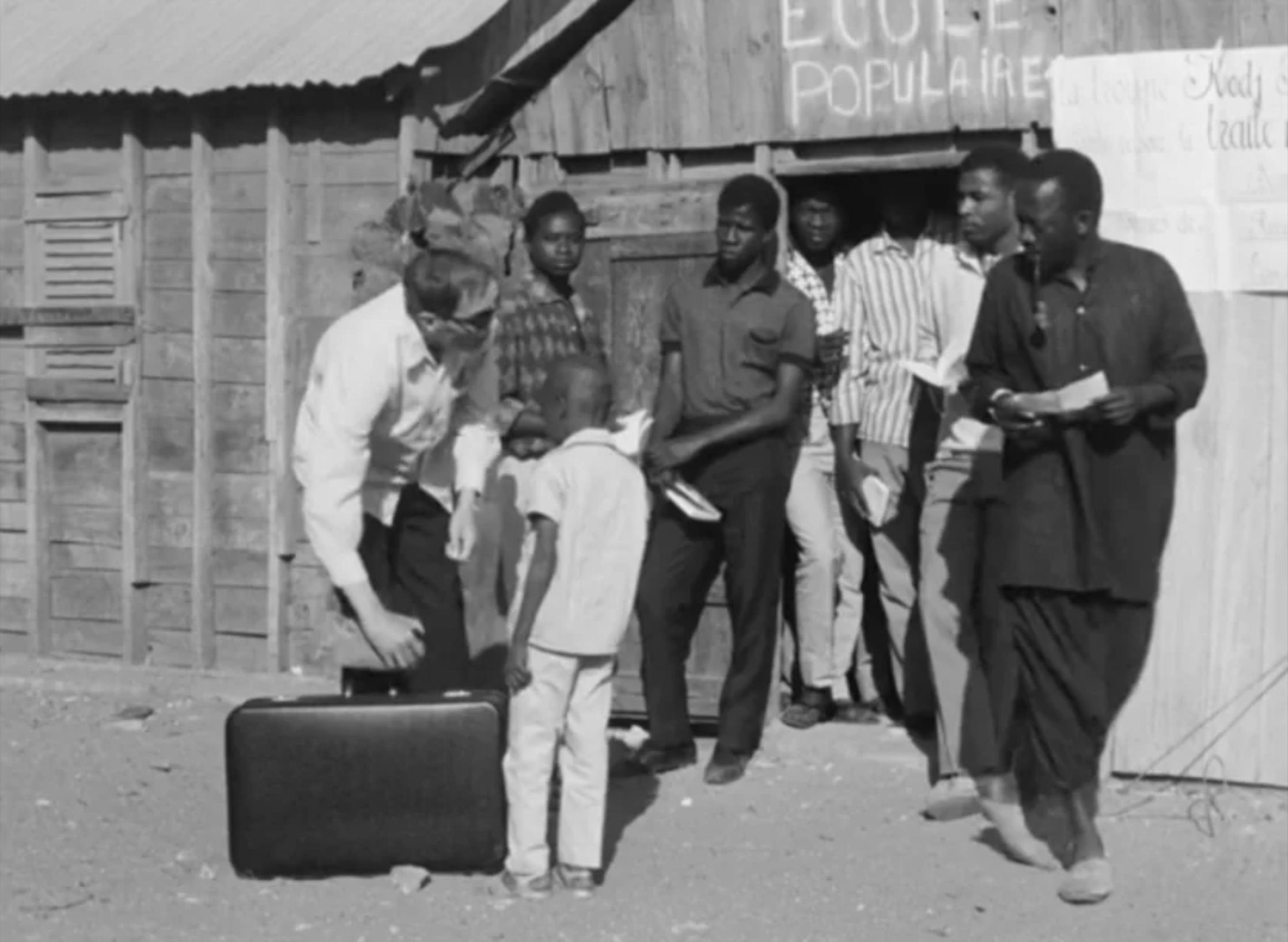 La noire de... (1966).
“Ousmane Sembène: Inverting the Colonial Gaze,” a dossier that I co-edited with my colleague and friend Raquel Schefer (Sorbonne Nouvelle University) for the journal La Furia Umana, is now available online here. We are grateful to the authors of the great articles included in the dossier:
• Mary Jane Androne (Albright College), “Work and Economic Change in Sembène’s Films;”
• M. Gail Hamner (Syracuse University), “Mask and Materiality in Ousmane Sembène’s Black Girl;”
• Jayson Baker (Curry College), “Black Girl and Global Media Culture;”
• Eddy Troy (Western Washington University), “Images at Work: Ousmane Sembène’s Feminist Film Aesthetics;”
• Savrina Chinien (The University of the West Indies), “Ousmane Sembène: The Throes of Postcolonialism?”
“Ousmane Sembène: Inverting the Colonial Gaze” also includes my article “Land and Power: The Landscapes of Ousmane Sembène’s Post-Colonial Cinema,” which may be accessed here.
Our thanks to Toni D’Angela, the editor-in-chief of La Furia Umana, for his support.
CFP: XI Encontro Ibérico de Estética “Nem Isto, Nem Aquilo: Espaços da Ambiguidade nas Artes e na Estética”
12.02.2025
Fui convidado para ser um dos oradores principais do XI Encontro Ibérico de Estética. O evento terá lugar na Universidade de Salamanca, em Espanha, entre 23 e 25 de Outubro de 2025, organizado pela Sociedade Espanhola de Estética e Teoria das Artes (SEyTA - Sociedad Española de Estética y Teoría de las Artes). A organização convida investigadores da área da estética e áreas afins a submeter propostas de comunicações. O prazo para submissão de resumos é 1 de Abril.
Mais informação aqui (em castelhano, português, e inglês).
CFP: XI Iberian Meeting of Aesthetics “Neither This, Nor That: Spaces of the Ambiguous in the Arts and Aesthetics”
12.02.2025
I've been invited to be one of the keynote speakers at the XI Iberian Meeting of Aesthetics. It is taking place at the University of Salamanca in Spain between 23 and 25 October 2025. The organization invites researchers in the field of aesthetics and related areas to submit paper proposals. The deadline for the submission of abstracts is April 1.
Further information here (in Spanish, Portuguese, and English).
Subscribe to:
Posts (Atom)


